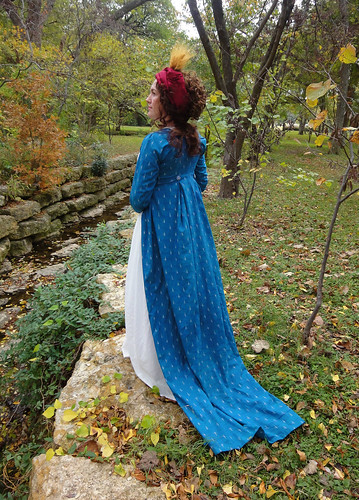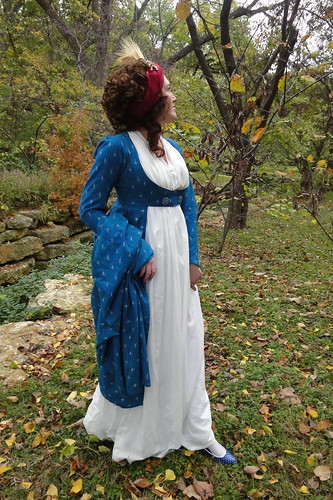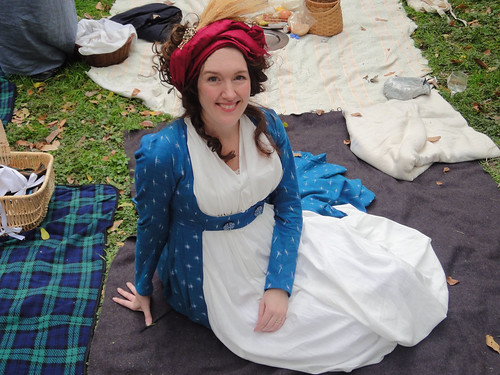
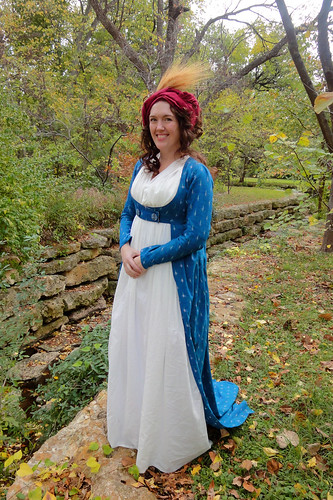
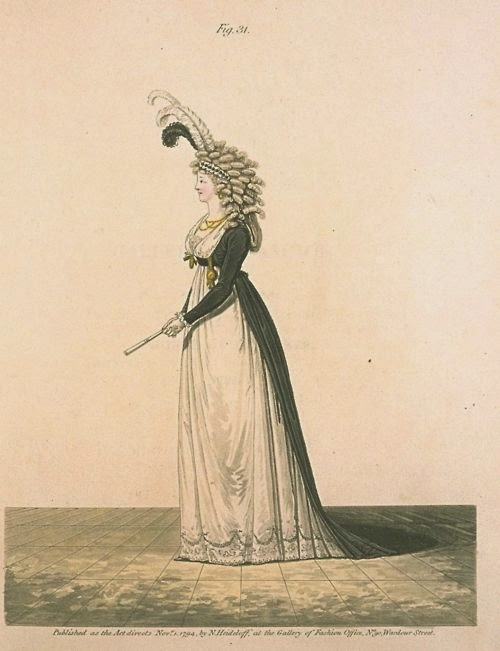
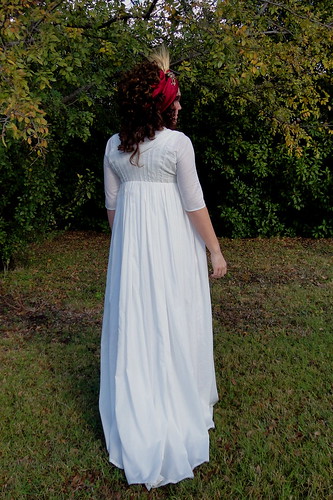
 The white round-gown worn under the open robe is a copy of this 1797 gown from Tidens Tøj. (the link is sadly broken now, but Aylwen has a screenshot of the pattern and her own beautiful photos of the dress on her blog. Thanks, Aylwen!) Although I was a bit intimidated by the pattern diagram at first, I was offered some help from dear friends translating the text, and it ended up going together beautifully. The sides and back of the bodice were covered with hand-sewn tucks that were mounted onto a linen foundation, and then the outer fabric was cut down to size. This was actually a really easy way to work, and I enjoyed having some mindless handy-work to keep me occupied during my lunch breaks. At times it seemed a bit silly to spend so much effort decorating a part of the dress that wouldn't even be seen, but hopefully, I'll find another occasion to wear the round gown on its own someday. The round gown is made up from some really lovely heirloom batiste that I got from Fabrique thanks to the gift card that I received from their remnant challenge last spring. Thanks again, Fabrique!

 The open robe is made from some ikat cotton that I bought fromHeritage Trading Company, which has GORGEOUS block-printed and ikat fabrics that are perfect for dresses from this period. I used the open robe pattern in Patterns of Fashion for the construction, and although it looked like it would be easy to put together, it actually turned out to be pretty difficult. My main problem is that I don't have a dress form that is my size, and this type of gown is draped to the body. I ended up using a dress form that was close, but not a true match, so I had to get dressed up over and over again so I could try it on and make modifications... which was tiresome. But I finally got it to work, and the way that the pleats are top-stitched to the lining means that it almost holds the shape of the body even when it isn't being worn, which is pretty cool. The only real modification that I made to the pattern is making the sleeves full length instead of 3/4, and I added some tri-color death's head buttons to the front cross-over as a bit of embellishment.
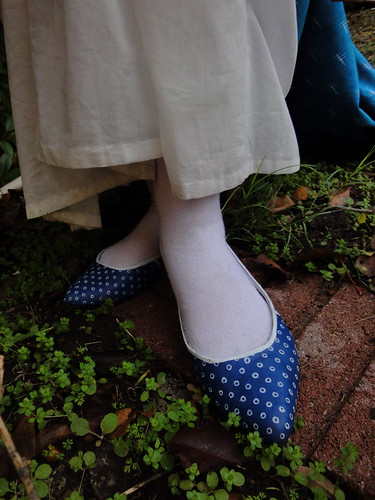
For the finishing touches, I decorated a pair of cheap Target flats with a white paint pen so they would have a pattern similar to these 1790's slippers. The vamp is a little low on these shoes compared to period examples, so I had planned on making some rosettes to cover that part up some more. Unfortunately, that was one of the only things that I didn't have time to get done, but I think they still work pretty good either way.
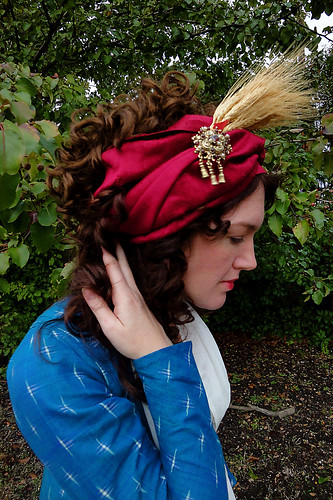
Here are a few more of my favorite pictures of my dress from the picnic, and you can see the full set on flickr. I'll be back to tell you about some of the cool 18th c. toys that we played with in my next post.