Wednesday, June 27, 2012

Costume Mythbusters: the case of the gaulle

True of False: A gathered-front 18th c. gown with tight sleeves and a fitted back is known as a "gaulle", vs. a gown that is gathered all the way around and has puffy sleeves, which would be known as a "chemise a la reine".

How would you answer?

If you had asked me this question 2 days ago, I would have answered True without hesitation.  I have read this over and over again online from people who know WAY more about 18th c. clothing than I do, so I believed it as fact.  For the past few years, I have been using this distinction myself and teaching other people to do the same thing.

But earlier this week I started wondering how the term gaulle was actually used in the 18th c., and I fell down a rabbit hole of research and historical fashion nerddom.  The specific way that we have been using the word "gualle" - i.e. as a distinct sub-category of the chemise dress with tight sleeves and a fitted back - is without a doubt FALSE.


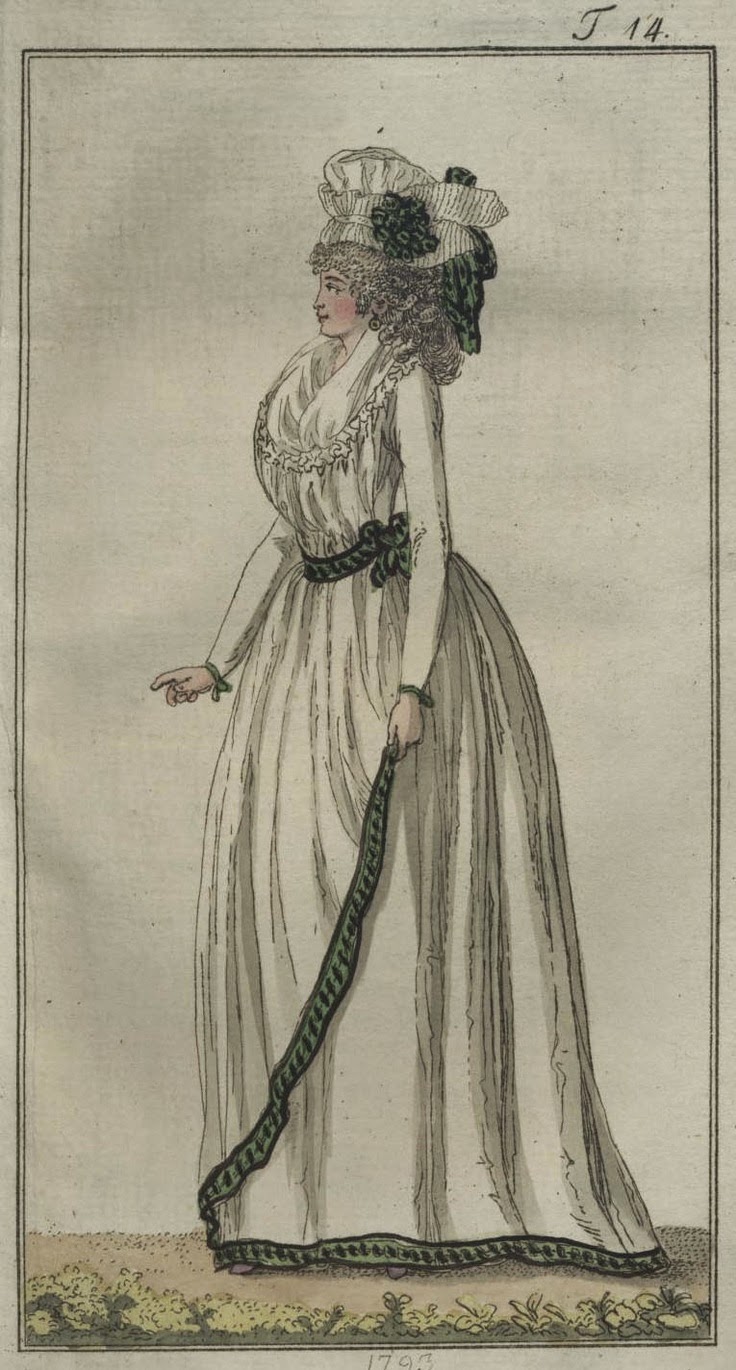
To unravel this myth, I decided to look though as many different 18th c. fashion journals as I could find to see what people were calling these gowns at the time that they were made.  I found over 40 examples of gathered dresses in 6 different French and German fashion publications from the 1780's and 90's.*  I have posted  most of these fashion plates along with the period words used to describe them on a Pinterest board for easy reference.  These dresses were called a lot of things, but I did not find one single reference to the word gaulle.  I was amazed!

There are other costume historians who are studying the topic of chemise gowns much more thoroughly, and I am sure there is additional information out there that I have missed.  But from my quick survey of online period fashion magazines, here are some of the things that I discovered:

  • The most common name for these type of dresses was "robe en chemise", which would translate simply to "chemise gown" in English.  Other plates were described by more exotic versions of the chemise title, such as "chemise a la Floricourt", "chemise a l'Anglaise", "chemise Grecque", "chemise a la Jesus", or "chemise a la Reine".  Other texts used the word "chemise" alone and simply added a descriptor for the type of fabric or color, like "ein Chemise von weißem Linon" (chemise of white lawn).  
  • Speaking of "chemise a la Reine", I only found this term used three times and in only one publication, and it was used for the earliest incarnations of this type of gown.  These illustrations were published just a few years after Marie Antoinette started wearing chemise dresses in the early 1780's.  At that point, they were still new and trendy garments specifically associated with the queen.  After chemise-style dresses became more common, the "a la Reine" appears to have been dropped.
  • In the very few instances when the word "chemise" was not used for gathered dresses, they usually were described as morning gowns (du matin) or with the term "neglige", which denotes a dress worn in informal situations.  A few others use the word "fourreau", which seems to mean something along the lines of a shift or a sheath dress.  Two plates were listed as "Creole" gowns, and one of those goes on to describe this as a gown worn by Frenchwomen in America, so maybe this type of garment was a popular choice for the heat of New Orleans.  Finally, one example described the gathered bodice as "en rideau", which means it is like a curtain.  But once again, no references to a "gaulle" anywhere.  
  • I found no distinguishing titles to separate gowns with puffy or tight sleeves, fitted or loose backs, or high or low necklines.  They were all called chemise gowns.  Even in the mid 1790's when the gowns began to morph into new forms with standing collars, deep V-necklines, and were combined with vests or various over-garments, they were still called chemises. 
  • Colored chemise gowns were quite common in fashion plates.  I found examples that were red, pink, peach, yellow, green, blue, purple, grey, and black.  The colors could be muted or very deep.  Colored gowns were listed as being made of muslin, linen, taffeta, and satin, and yet again, they were all referred to as chemise gowns.   
  • Patterned chemise gowns in muslin or silk also existed.  Small dots and stripes were the most common, but I found one example of a chemise gown decorated with stars.   
I have no doubt that the word "gaulle" was used somewhere in 18th c. texts as a creative or exotic title for a chemise dress, but it definitely was not the norm, and it definitely had nothing to do with how fitted the dress was.  And BTW, if anybody knows of an example of the word gaulle used in period literature or fashion plates, I would LOVE to hear from you!  The only example of this word that I could track down was from the painting, Marie Antoinette en Gaulle, which my fabulous art historican friend Sarah from Mode Historique tells me was actually called "la Reine avec chapeau" inVegee-Lebrun's own painting inventories.  It seems that later art historians are the ones who added the term "gaulle" to the title.

But does all of this mean that you shouldn't use the word gaulle anymore?  Well... not necessarily.  You could think of the word "gaulle" like the term "zone gown", which is another modern costume term that was not used in the 18th c.  Neither of these might be historically accurate words, but if historians and costume enthusiasts have agreed to use these words for particular styles of dress, then what's the harm in it?  I just want people to be informed about the historical facts as well, and then you can make an educated choice about whether you prefer to use the modern dress term or the period one.

So now that this myth has been busted, stay tuned to read more about my newest project - a black striped gaulle robe en chemise.


*All of the fashion plates that I used for this survey are found online at these three sources.  If you know of other webbed 18th c. fashion journals that include the original text, please let me know!
Journal des Luxus und der Moden
Bunka Gakuen Library (browse by "History/Age" - there are a number of journals in the 18th c. section)
Gallica copy of Journal de la mode et du goût


Thursday, June 21, 2012

Site migration info

I've been poking around and figuring out some of the more advanced features on Blogger, and the good news is that most of my old site will be able to transfer over here pretty painlessly.  When my old hosting service expires, the festiveattyre.com address will bring you directly here to my blog.  I also figured out how to set up static pages on Blogger, so when you click on the "Research" tab at the top of this page, it will take you to an index of all of my old articles and images galleries.  I have already started moving them, and it is going faster that I had hoped, so I'm hoping most of the research page content will be transferred before the old site goes away.   I have also added all of the new tutorials that I have written here on my blog to the research page to make them easier to find as well.

After the articles and image galleries are moved, I will move the photos of my own costumes, and then if I have any energy left over after that, I might move some of my old dress diaries over here... but I'm not making any promises about those.  The Featured Attyre is the only section that I am not going to move at all.

I'm really excited to see that the best parts of my old site will continue on without too much disruption, and I even more excited to see how easy it will be to add new content in the future.

Wednesday, June 20, 2012

old site, new site


So back in the dark ages of the internet, I had a website that I updated constantly and poured lots of love into: festiveattyre.com.  It was a wonderful outlet that helped me connect with other costumers and chronicle my sewing adventures long before the word "blog" even existed.  But then my son came along and I took a 2 year hiatus from my site to focus on family, work, and the DFW Costumers' Guild.  Then the true death knell came when I discovered the joys of Blogger, and I grew to hate messing with HTML and anything related to my old site.  It is just SO much easier here, and I'm all about easy these days.

Now that my web host is raising their rates to a ridiculous amount, I think it is finally time to let my old site retire.  I plan on continuing my Festive Attyre site here as a pure blog in the future.  I will be re-posting some of the most popular content from my old website here or to flickr over the next few months so it doesn't go away completely.   It won't be exactly the same, and some things will be left to fade away into internet archives, but hopefully the most useful stuff will carry on.  

My old site is scheduled to expire on July 4th, so if there is any old content that you want to save, you might want to save it or print it to make sure you have it.  I plan on moving most of my articles, the Petersons's fashion magazines, and my own costume photos, but it might take me awhile to do all of that.  If you have any requests for things you would like for me to repost here ASAP, let me know and I will see what I can do. 

Thank-you for your support and understanding.  I know this will mess up a lot of bookmarks, but I hope you will forgive me for that.  After 12 years of having a "old fashioned" website, it actually feels really nice to start fresh and move on from the past.  I hope this change will inspire me to work even harder to make this blog my new home.  

Friday, June 15, 2012

What's time to a pig?


I've been working hard on my hand-sewn 1790's stays for the past few weeks, and I have enjoyed it more than I ever could have imagined. I have always been firmly in the anti-hand-sewing camp in the past. I never could wrap my brain around why people would spend so much effort slaving away on something that would never even be seen. It just seemed like such a colossal waste of time to me, and I thought the only reason that people hand sewed anything was for bragging rights, which doesn't interest me at all.

But I think I finally "get it" now. For me, hand sewing a garment isn't about doing it for the glory or for some ultimate step toward historical accuracy. The thing that I didn't expect to discover is that hand sewing is actually relaxing and fun! OMG - who knew?

When I was in grad school, I once complained to my favorite professor about how long it would take to finish an elaborate printmaking project.  He replied by telling me a joke:
There once was a traveling salesman driving through the countryside, when he observed what appeared to be a farmer holding a pig over his head under an apple tree. Curiosity got the best of him, so the salesman stopped and backed up. Sure enough, the farmer held a pig that was eating apples right off the tree. “Why are you holding that pig up to eat apples?” asked the salesman. “It’s because he likes the fresh apples right off the tree better than the bruised fruit on the ground,” came the farmer’s reply. “I see,” said the salesman. “But I’m amazed. Doesn’t feeding your pig like that waste a lot of time?” The farmer paused, reflected, and finally said, “I suppose you’re right. But then again, what’s time to a pig?”
The moral that I took away from that story boils down to this: what else would I be doing with all of those hours that I was so concerned about? Watching TV? Wasting time on the internet? Playing silly games on my phone? Sitting around thinking about how bored I am?  OR... I could be doing something with my spare time that brings me enjoyment and creates something amazing. Yeah, it takes forever and I could have accomplished the task in a much easier way, but so what? Isn't art worth the time?

It has been truly lovely to work on a project that doesn't have tight deadline.  I've been carrying a piece of my stays in my purse with me at all times, and I stitch a few rows whenever I am bored or have some time to kill.  I've enjoyed having something that keeps my fidgety fingers busy, and it is so cool to see how much my sewing has improved from those first wobbly lines of stitching.  I've even discovered that I can now feel the difference between a sharp needle and a dull one.  Like all good meditative practices, regular hand sewing makes you notice the details and become more attuned with your environment.  I think that is a very cool thing.

After 3 weeks of work, I am now starting on the final stages of this project.  I am currently assembling the pieces and sewing the eyelets, and then I just have to bind the edges and add the lining.  It has progressed much faster than I thought it would, and I am already trying to think of another small hand-work project to fill the void once this one is done.  I've learned that sometimes it is nice to slow down and smell the roses, eat the apples, or stitch the channels.  After all, what's time to a pig seamstress.  :)

Sunday, June 10, 2012

Bustles at the museum

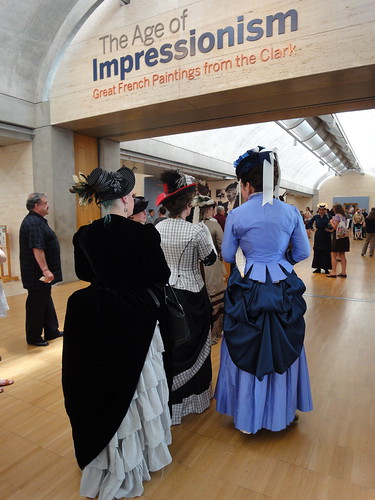
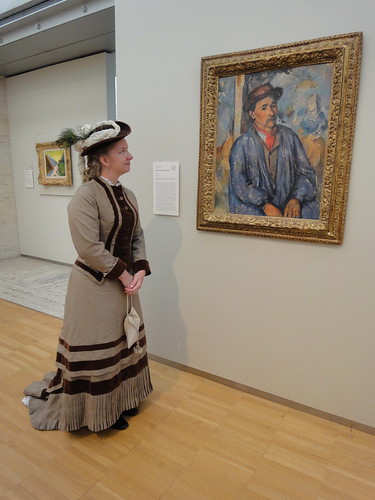
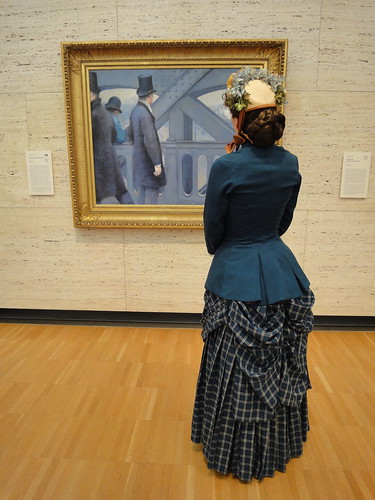
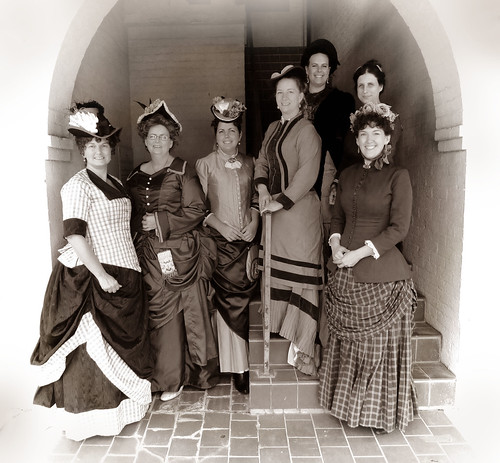
This weekend the DFWCG took a trip to the Kimball Art Museum to see an exhibit on Impressionism, and we all wore bustle-era fashions for the occasion.  We were quite the side show at the museum, but everybody was so gracious and nice to us, and we had a really lovely time seeing the art and chatting with people about our clothing.  We finished the day by heading over to La Madeline for desserts and more socializing.  It was such a fun afternoon!

DSC09786

While waiting for other guild members to show up at the museum, we posed for a LOT of pictures from all the curious bystanders.

DSC09810

Eventually we all arrived and we went into the exhibit, where unfortunately, photos were not allowed.


DSC09815   DSC09813

But they did allow photos in the permanent exhibit, so my friend Christy and I posed for a few quick pics with the art.

DSC09836sepia

Here's the majority of our group at the end of the day. We had already lost several of our lovely ladies at this point, but it's the best group shot that we got. More photos from the day can be found on my flickr.

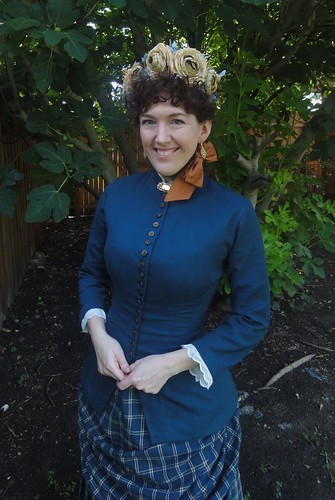
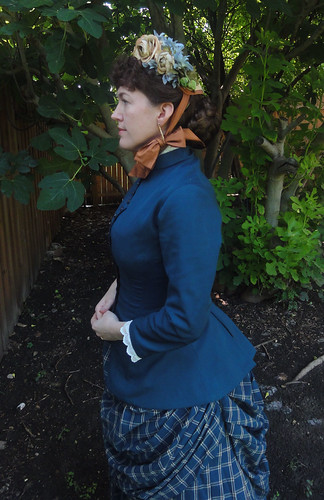
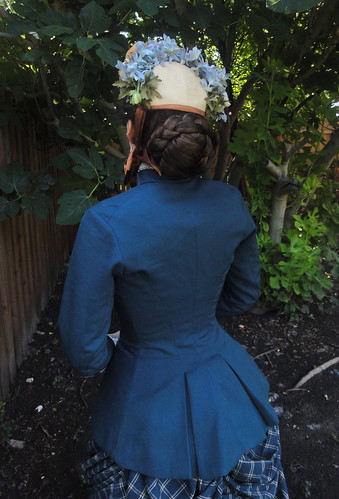
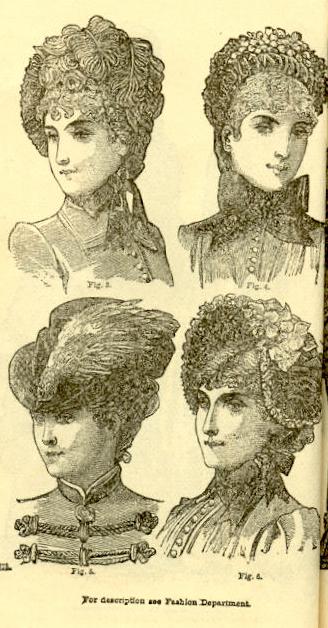
DSC09766As for me, I ended up wearing a "this old thing" dress from my closet, but I had to make a new hat for it since my original bonnet got crushed on the return from from Costume College last year.  The straw on the brim was broken in several areas, but the crown was fine, so I chopped off the brim and recycled all the bits and pieces to make it into a small brimless bonnet similar to the one seen on the top right here from koshka-the-cat's collection of 1883 Godey's illustrations.  I really miss my wide-brimmed bonnet, but this was better than nothing.

I also tried wearing a curly fringe hairpiece since it is almost impossible to find a photo or illustration of women in the 1880's without bangs.  I know it it technically "correct" for this era, but seriously, y'all - I hate it.  I feel like I'm back in middle school in the 1980's with a bad perm.  LOL!  I think I'll try wearing straight bangs next time since I've found a few photos of women from the 1880's with non-curly fringe.   But oh well... at least I tried!  :)


DSC09763    DSC09765

Monday, May 28, 2012

1790s hair and turban tutorial

I got a good bit of practice wrapping my turban and fixing my hair to wear with my 1790's outfits this past year, so I wanted to show you all my technique for making this style.  There are lots of illustrations and paintings of women wearing turbans in this period, and the artist Louise Elisabeth Vigee Le Brun painted a ton of beautifully turbaned women like the one shown here from 1797.  It's a fun style to wear and I think it is very flattering as well.  And best of all, it took me less than 5 minutes to do my hair from start to finish.  I love fast and easy hair!
 

 And as a postscript, here's a little more information that I didn't cover in the video:

 - I bought the curly hairpieces from a local store called Sam Moon, but I've seen similar curly ponytails on ebay, at beauty supply stores, and even at drugstores.  It gets a bit pricey to buy two of them, so you might be better off buying a cheap wig and just cutting it down to cover the back of your head only, or you could buy one longer hairpiece and pin the curls up more to add volume and fill in top.

 - I forgot to mention that the clip-on ponytails also come with an elastic drawstring that goes around the edge to cinch it up around a bun if you want to wear it that way.  I removed both the claw clip and the elastic and stretched them so they would sit flat on my head.  The combs were already attached when I bought it.

- Here is a link to the setting lotion that I mentioned.  That stuff is wonderful!  I use a 50/50 mixture of Lottaboday and water and I keep it in a spray bottle so I can spritz my dry hair with the setting lotion before rolling.

- It is easy to make the extra decorations like a feather or a wheat spray go across your head, but it is harder to get them to stick straight up, which was a popular look in the 1790s.  I recommend Lynn McMasters' fabulous wrapped turban tutorial for help with that one - look on the articles page of her website.

Tuesday, May 22, 2012

hand-sewing madness

I have caught the hand-sewing madness lately, and one of my big goals for the summer is to hand-sew a new set of stays from 1790.  I can't guarantee that I'll actually pull this off, but I'm really excited about the thought of trying!


I have the pattern fitted now and I just got my fancy linen thread in the mail today.  I ordered it from William Booth Draper and I was so happy with the customer service there.  The shipping ended up being less that what was listed on the website, and they even let me go back and add some cotton tape to my order when I poked around their site some more and realized how cheap it was.  Some of you have probably been ordering from them for years now, but this was my first time and I couldn't be happier.  And it is such a treat to have nice sewing supplies to work with - it feels so decadent! 

You can also see the wool that I am using to make my stays in the background of this picture.  I dyed it myself to look like the pretty pink stays seen here.  I'm SO excited about starting this project.  Hopefully I'll be back in a few months to show you the finished results.  


Wednesday, May 16, 2012

sucker for a giveaway

OMG.  Have you seen the new American Duchess shoes?  DROOL!  She's having another giveaway, so here I am spreading the love so I can enter.  I'm definitely a late-18th century girl when it comes to dresses, but I think I'd have to change my ways if I won a pair of shoes like these.

Tuesday, May 15, 2012

1890's cycling costume

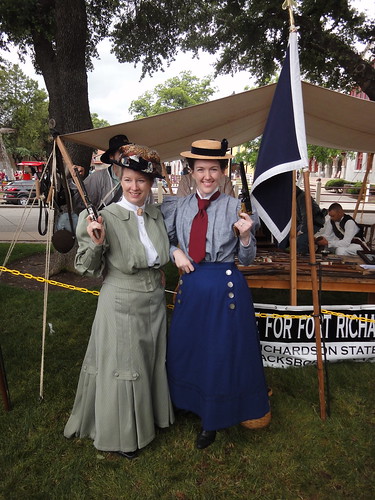
This past weekend was Frontier Forts Days at the Ft. Worth Stockyards, so a group from the DFWCG took a train ride on the vintage railroad and then attended the event at the Stockyards in our best Victorian duds.  It was a truly delightful outing, and you can read more about our day on our guild blog.

DSC09684

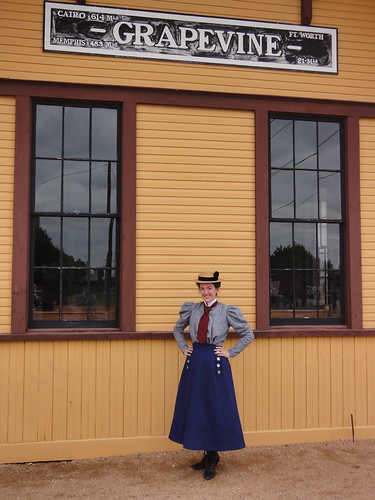
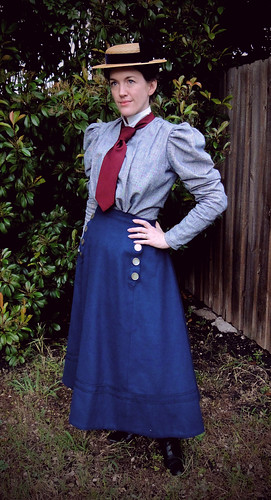
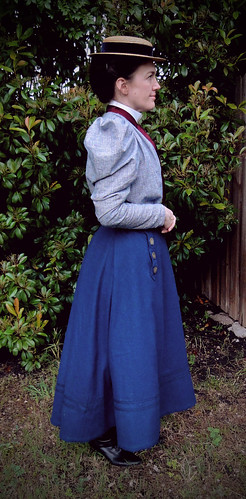
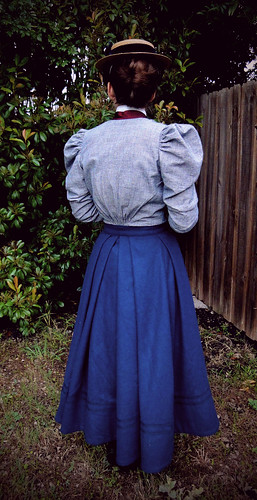
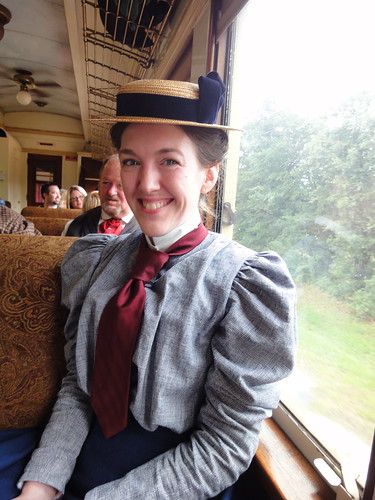
I finally finished my cycling outfit that I've been angsting over since January.  Jeesh!  It really doesn't look that hard, does it?  But the silly thing gave me fits to make - it was one of those projects where nothing goes right.  But with that being said, I LOVE the way it turned out, and I had more fun wearing this outfit than anything that I've made in a long time.  I felt so liberated and progressive in my short skirt and dapper hat and tie - I can totally see why women of the 1890's were so crazy about cycling.

So here are a few of the nitty-gritty details about my outfit if you are curious:

DSC09710 DSC09707 DSC09712

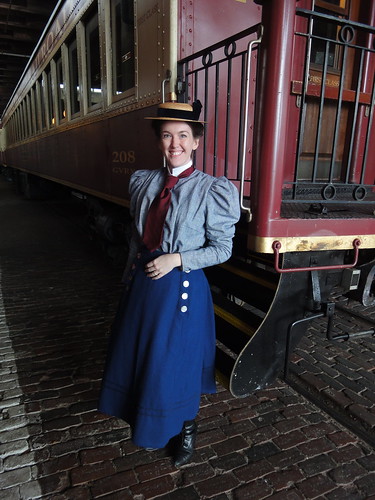
I based the design of my skirt on numerous photos on female cyclists in ankle-lenght skirts with button placket, like the one shown on the right (and check out my Pinterest board for many more).  I used the 1894 skirt pattern from page 99 of Authentic Victorian Fashion Patterns, and the only change I made to it was shortening the hem a little and pleating the back instead of gathering it.  The skirt is made of soft wool with a felted finish - somewhat like melton but much lighter.  I stiffened the hem with a wide facing of duck, and that did wonders for getting it to flare out in a 90's-style bell shape.  I used vintage shell buttons for the placket, and I had to hand sew all the buttonholes because my sewing machine rebelled and refused to sew though this much thick wool (and in the process, I decided that b*ttonh*les deserves to be a curseword!)
I based the design of my skirt on numerous photos on female cyclists in ankle-lenght skirts with button placket, like the one shown on the right (and check out my

DSC09515

My blouse was a hodge-podge of of patterns from Authentic Victorian Fashion Patterns and 59 Authentic Turn-of-the-Century Fashion Patterns, which are both by Kristina Harris.  The body of the blouse came from the fashion plate on page 99, but I used the wrinkled mutton leg sleeve pattern from another fashion plate and removed the gathering at the back of the neck.  It has a fitted lining in the body and sleeves, and all the gathered bits are tacked to the lining to keep it neat and tidy.  It was a real challenge to get this pattern to fit correctly, and I had to change the shape of the shoulder and neck seams quite a bit to get it to fit my freakishly square shoulders.  I also decided to remove some of the extra fabric from the body so it wouldn't be overly puffy.   The fabric is silk noil woven in a tiny navy and white houndstooth pattern, and it was probably a bit thicker than this pattern was intended for.  

The outfit was finished off with a vintage straw boater hat, and some 1990's lace-up granny boots.  I had meant to make spats, but I ran out of time and they didn't get done - but maybe I'll try again the next time I wear this outfit.  I actually wanted to wear a bow tie instead of a long tie, but there was some unfortunate gaping between my hooks in front, so thankfully, the long tie hid the ugly spots.  

I love taking silly pictures while dressed up in my costumes, and this outfit seemed to inspire even more silliness than usual.  Here are some of my favorites from the event.

DSC09531
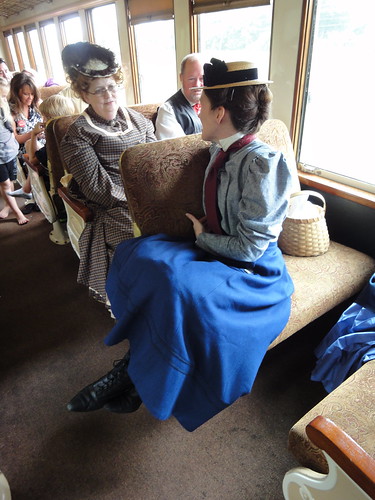
 Making myself comfy on the train.  Tisk, tisk - so un-ladylike!

  DSC09551 
Posing with the back of the train at the stockyards station.

DSCN0491 DSC09607 
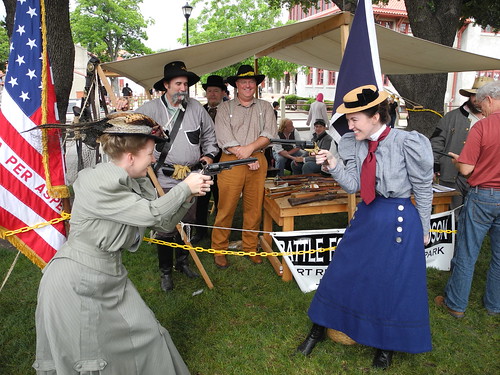
My friend Christy and I had way too much fun playing with the period guns.  

DSC09626
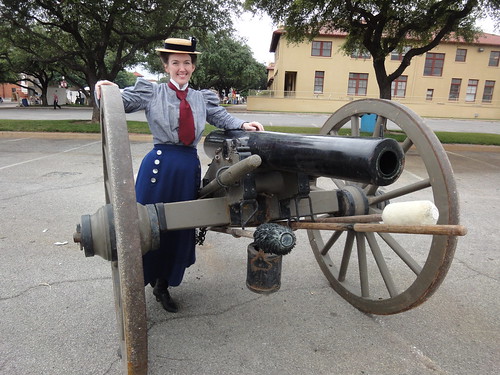
Time to move on to the BIG guns next!

Christy and I are quite the rabble-rousers!

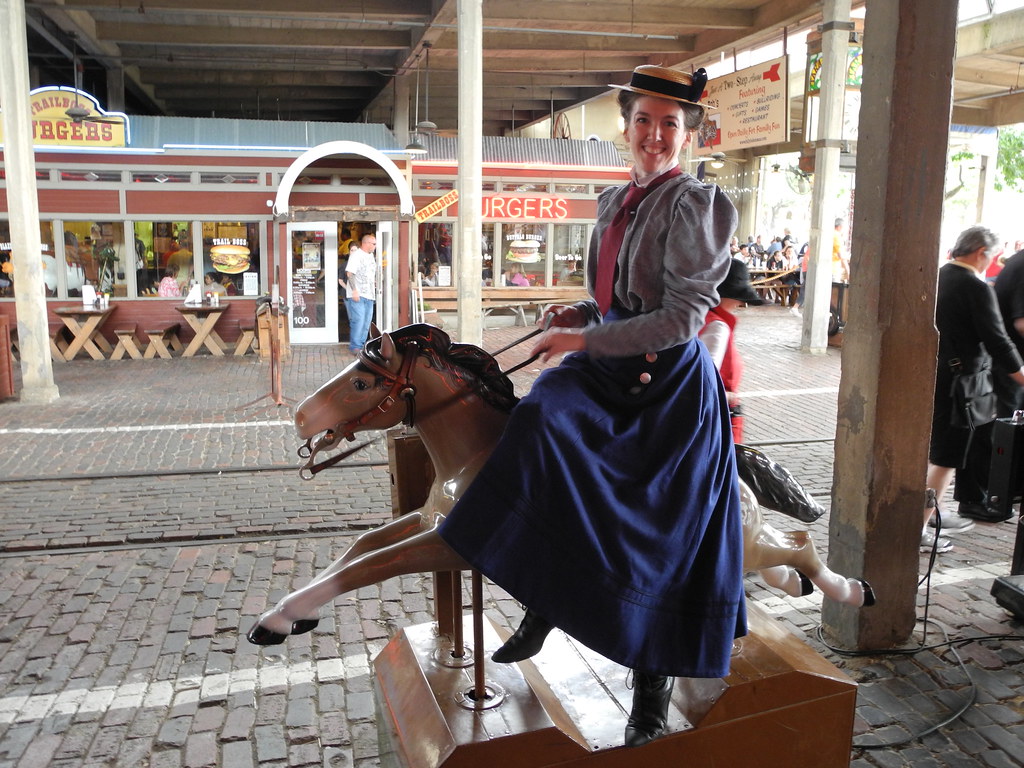
I couldn't find a bicycle to ride, so this poor horse had to make do.

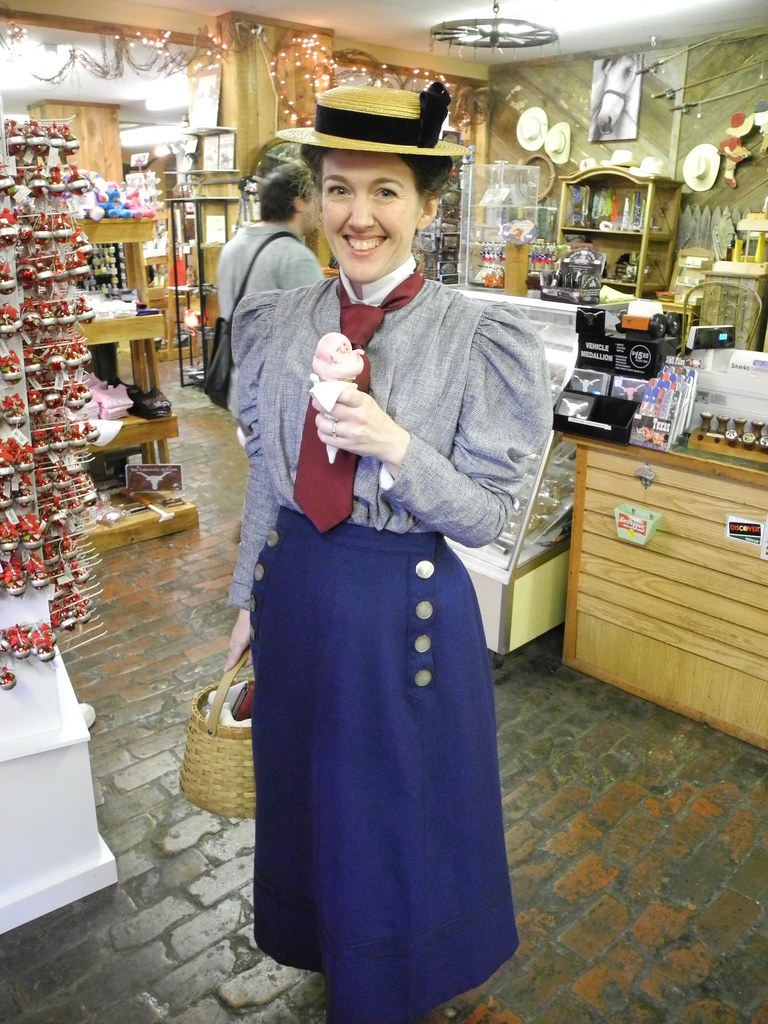
All this goofing around makes a gal hungry!

cycle
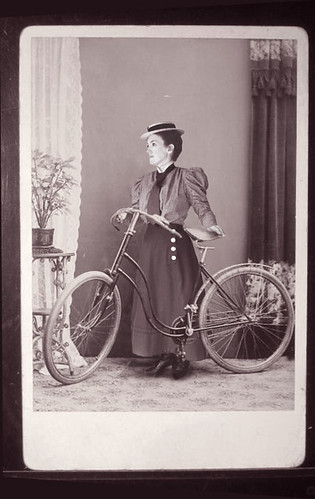
And last, but not least... I was DYING to take a picture with a bicycle, but I never could find one, so I decided to just photoshop myself into an old photo.  Eh... it's better than nothing.  :)


The rest of my photos can be found on my flickr album, and special thanks to Cynthia and Christopher for letting me use some of their photos as well.


Friday, April 6, 2012

steam-n-tea

DSC08990
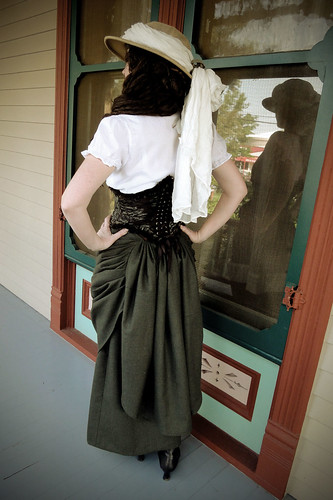
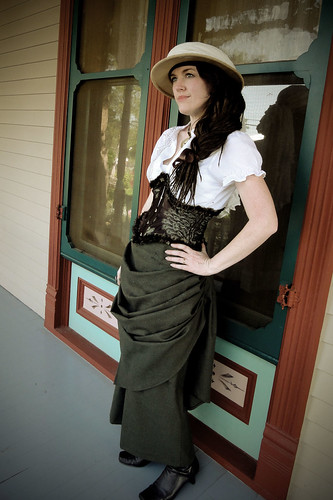
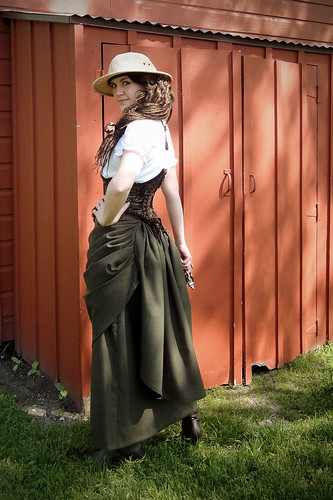
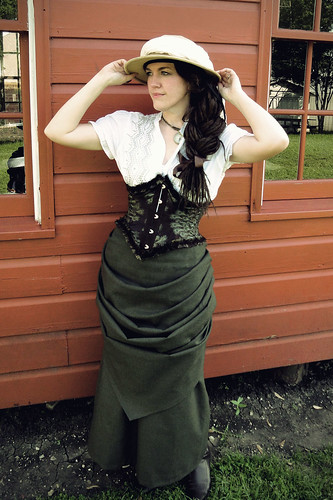
So last month I told you all that I was working on an 1890's cycling costume for our DFWCG Steampunk Tea Party.  Well... life got in the way, and that outfit didn't get finished in time, so I've put it on hold until our train ride outing in May.  I ended up digging though my closet and settling for a hodgepodge, thrown-together, last minute costume.  It's a very typical steampunk look, but it was fun and easy, and really, isn't that what steampunk is all about?

The whole outfit was really designed around my 1904 ribbon corset that I made 2 years ago, but I never got to wear because it was too small for me until recently.  I'm thrilled to finally find a use for it.  Next I dug out some olive green wool from my stash, and I whipped up a long straight skirt from a vintage 1930's pattern.  Then I draped a natural-form style overskirt from the small pieces of fabric remaining.  This skirt is a total hack job, and I didn't even bother to finish the waistband or add permanent closures since I was running so sort on time.  The blouse, scarf, and boots are staples in my modern wardrobe, and the hat and  hairpiece are from other costumes.  Easy peasey!  I actually like the way it all came together, and I had a blast at the tea party.  Our hostess really outdid herself with the beautiful table setting and food, and then we all went outside and shot our modded nerf weapons and water guns.  It was silly and fun and truly lovely afternoon.

Here are a few pictures of my costume, and more pictures from the event can be found on flickr if you'd like to see the rest of our steamy tea.

DSC09017
DSC09014

DSC08938DSC08980